Research

Research

Animal movement, demographic inference and conservation decisions under uncertainty.

Many ecological processes that matter for conservation are only partly observable. Animals move through changing landscapes and seascapes; survival and reproduction are imperfectly measured; exposure and vulnerability often have to be inferred from noisy data.

Our work develops quantitative approaches for these problems. We use movement, sensor, demographic and monitoring data to estimate hidden ecological states, connect them to population processes, and ask how uncertainty should affect monitoring and management.

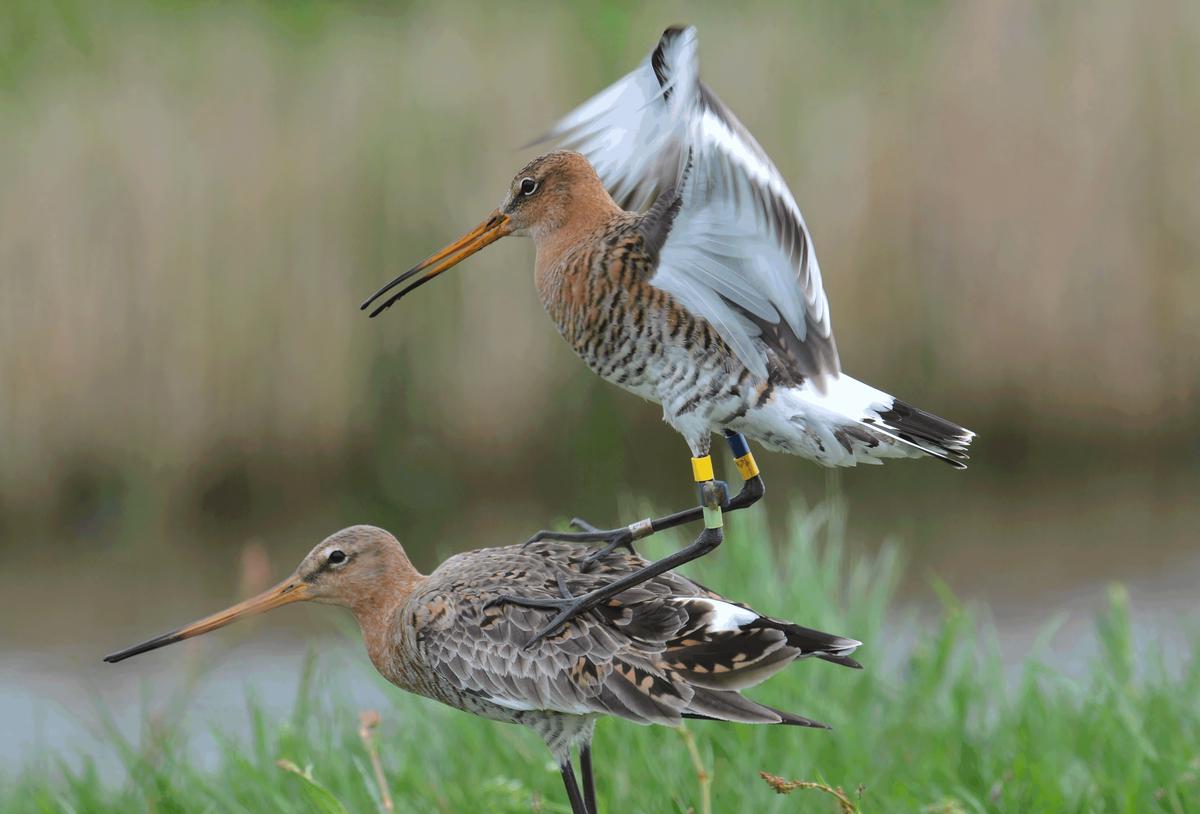
Black-tailed godwit research landscape
Photo: Jan van de Kam

Theme

Conservation demography and annual-cycle limitation

We estimate demographic processes that cannot be observed directly, such as survival, recruitment, reproductive status and life-history stages that shape population trajectories.

Key questions

  • Which demographic processes limit population recovery or change?
  • How do breeding, migration and non-breeding conditions connect across the annual cycle?
  • How do imperfect observations and hidden states affect conservation inference?

Example systems/projects

  • Black-tailed godwits
  • Bar-tailed godwits
  • Brent geese

Methods

  • Integrated population models
  • Capture-recapture models
  • Multi-event and multistate models
  • Population projection
  • Uncertainty-aware demographic inference
Theme

Movement ecology and behavioural inference

We use tracking and biologging data to infer behavioural modes, movement decisions, resource use and exposure to environmental conditions.

Key questions

  • What are animals doing when behaviour is not directly observed?
  • How do individual state, weather, resources and social information shape movement decisions?
  • Where and when do animals encounter pressures or opportunities?

Example systems/projects

  • Migratory shorebirds
  • Geese
  • Gulls
  • Spoonbills

Methods

  • Animal tracking
  • Hidden-state models
  • Behavioural classification
  • Movement-path analysis
  • Resource-use inference

Theme

Animal-borne monitoring and sentinel indicators

We explore how animal-borne data can reveal environmental exposure, behavioural change and vulnerability in ways that complement conventional monitoring.

Key questions

  • Which sentinel signals can be inferred reliably from tracking and sensor data?
  • When do movement or behaviour data indicate exposure to environmental pressures?
  • How can tracking-data infrastructure turn animal-borne data into interpretable ecological indicators?

Example systems/projects

  • Waakvogels
  • UvA-BiTS tracking infrastructure
  • Gulls, geese, storks and other tracked birds

Methods

  • Indicator development
  • Automated tracking analysis
  • Behavioural discovery
  • Dashboard development
  • Event-led calibration

Theme

Developing direction: ecological inference for conservation decisions

We are developing ways to connect demographic models, movement-based indicators and uncertainty-aware forecasts more directly to conservation and monitoring decisions.

Key questions

  • Which ecological uncertainty matters most for conservation interpretation?
  • How can demographic and movement models help frame possible management actions?
  • What information is needed before conservation action, monitoring investment or preparedness planning can be improved?

Example systems/projects

  • Black-tailed godwit conservation landscapes
  • Waakvogels monitoring and dashboard outputs
  • Biodiversity monitoring and preparedness collaborations

Methods

  • Problem framing with stakeholders
  • Uncertainty-aware forecasting
  • Monitoring design
  • Scenario exploration
  • Management-relevant model outputs